
By Chris Dow
THE Anglican Church of Canada’s Council of General Synod has released Pastoral Liturgies at the Time of Death in Contexts of Medically Assisted Dying, the denomination’s first publication on the topic since Faith Seeking Understanding(2024). That earlier collection, presented as a resource for discussion, offered a range of perspectives on euthanasia, including serious reservations and outright opposition. Its editorial stance was neutral, aiming to help Canadian Anglicans think through the ethical and practical complexities of MAiD.
With these new Pastoral Liturgies, the denomination’s position has shifted decisively. There can no longer be any serious doubt: The Anglican Church of Canada has adopted a pro‑euthanasia liturgical posture, whatever qualifications the authors attempt to preserve. The tension is evident in these words from the introduction:
In planning this liturgy it is important to be mindful that what is blessed, prayed for and honoured is not the choice itself or the process leading to the decision for a medically assisted death. We acknowledge that this is a difficult place to hold. We are here to support a person who is at the end stages of their life.[1]
Although the authors insist that the choice for euthanasia itself is not being blessed, the liturgy invokes God’s blessing at the very moment that choice is carried out, surrounding it with prayer, Scripture, absolution, anointing, and Holy Communion. Consider also how the authors attempt to avoid the moral question by appealing to pastoral need:
Our intention is to help the church’s ministers to respond pastorally to the needs before them. It is not our intent to enter into the ethical arguments regarding MAiD, nor to provide a moral argument for or against MAiD. This resource is about responding to pastoral needs of those who are dying; the project came about because some local leaders, including some bishops, identified the pastoral need to develop such resources.[2]
Experience-based pastoral sensitivity is elevated above doctrine and moral reasoning, reducing ministry to accompaniment, unconditional affirmation, and positive regard. But pastoral care severed from the Church’s teaching tradition is not morally neutral; it is theologically bankrupt. To accompany a person through euthanasia while responding positively and uncritically to all their “needs” and wishes assumes the moral permissibility of the act being accompanied. This liturgy cannot be morally neutral, because it rests on the premise that a decision for euthanasia is in accordance with God’s will and therefore not something to be repented of, nor an impediment to receiving absolution or Holy Communion. Genuine pastoral care must be willing to teach that not every choice is compatible with Christian faith, and that euthanasia is not a Christian way of dying. Baptized members who choose it remain, nonetheless, within the Church’s pastoral concern, but priestly presence cannot be offered at the moment of intentional death, since such presence would inevitably signify approval of what the Church cannot bless.
Supporters of these liturgies will likely argue that they are merely optional, only for trial use, and not yet formally adopted by General Synod – and therefore do not constitute official teaching. Approving new liturgies through synodical procedure is a slow, gradual process – and rightly so – as careful consideration is needed given the principle of lex orandi, lex credendi: the law of prayer expresses the law of belief. Intentionally or not, these trial liturgies begin shifting the church’s beliefs, moral imagination, and practice long before the matter can be debated and brought to a vote.
By publishing trial liturgies that normalize in practice what has not yet been made official in teaching, the Anglican Church of Canada appears eager to align itself with the trajectory of secular society. In doing so, the church risks yielding its distinctive role to a medical system in which physicians have assumed a quasi-pastoral and priestly authority, shepherding their patients to deliverance from deaths considered harmful or undignified. The “Liturgy of Preparation for Death” concludes with a rubric stating, “The medical team may enter soon for their role at this point.”[3]This is precisely the opposite of the Christian ars moriendi (“art of dying”) tradition, where the physician withdrew to allow the priest to preside over the dying person’s final moments. In these new rites, the priest steps aside and hands over the decisive role in the ritual to the physician, who administers a pharmacological pseudo‑sacrament that imparts a false grace: an intentional act of killing construed as a gracious and compassionate salvation from suffering.[4]
All of this stands in stark contrast to the Church’s long and consistent opposition to euthanasia. In a Greco-Roman world where suicide and mercy killing were often accepted, the first Christians were distinguished by their refusal to participate in the intentional taking of innocent human life. This has always been the teaching and practice of the one, holy, catholic, and apostolic Church, and it remains so to this day. The Catechism of the Catholic Church offers a concise and representative summary of the Church’s historic and universal position:
Intentional euthanasia, whatever its forms or motives, is murder. It is gravely contrary to the dignity of the human person and to the respect due to the living God, his Creator.[5]
The error of judgment into which one can fall in good faith does not change the nature of this murderous act, which must always be forbidden and excluded.[6]
This is not a Roman Catholic judgment imported into an Anglican debate; it expresses the basic Christian moral consensus that Anglican teaching has historically shared and which both the Church of England[7] and worldwide Anglican Communion continue to affirm.[8] The consensus is also expressed in the official standard of doctrine and discipline of the Anglican Church of Canada: whatever pastoral accommodations may be made in practice, the introductory rubric to the Prayer Book burial office states that the ordinary rite of Christian burial is not normally to be used for a person who dies by their “own wilful act while in a sound state of mind.”[9]
There is now a profound dissonance at the heart of the Anglican Church of Canada’s identity. In the Solemn Declaration of 1893, we claim to be “in full communion with the Church of England throughout the world, as an integral portion of the One Body of Christ” and “in the fellowship of the One Holy Catholic and Apostolic Church.”[10] Yet we have now diverged sharply from the universal Church’s consensus fidelium on one of the most fundamental moral issues of all, opening a massive chasm between the identity we profess and the theology we now practice.
What emerges here is a contradiction both ecumenical and internal. In authorizing liturgical forms that accompany, bless, and honour a medically administered death chosen by one’s own wilful act while in a sound state of mind, the Anglican Church of Canada has set its liturgy and pastoral practice against its own doctrine and discipline. In doing so, the denomination has become a house divided against itself and has seriously imperilled its claim to stand within the universal Christian tradition. The gravity of this development is immense and marks a watershed moment in the history of the Anglican Church of Canada.
That an Anglican province marked by catastrophic membership “collapse”[11] should now be the first to bless and liturgize euthanasia is no coincidence. As I have argued previously, it can best be understood as an expression of a dying church’s own “inchoate desire to be euthanized.”[12] Here, lex orandi, lex credendi gives way to lex moriendi: when the law of belief is abandoned, the law of prayer becomes the law of death. A declining denomination that eschews Christian teaching to liturgize the intentional ending of its members’ lives commits ecclesial euthanasia. In blessing what the Church universal has always condemned as murder, the Anglican Church of Canada has not merely accommodated a cultural practice; it has surrendered its Christian witness and capitulated to Death itself. This cannot be set right, nor can our decline be reversed, unless we repent of this grave error.
The Rev’d Chris Dow is the Chaplain of Wycliffe College at the University of Toronto and the Vice-Chairman of the Prayer Book Society of Canada. Previously, he has served parishes in Saskatchewan, Toronto and the Arctic.
[1] Council of General Synod, Pastoral Liturgies at the Time of Death in Contexts of Medically Assisted Dying (Toronto: General Synod of the Anglican Church of Canada, 2026), p. 8.
[2] Pastoral Liturgies, p. 3.
[3] Pastoral Liturgies, p. 19.
[4] Chris Dow, “In Sure and Certain Hope of Death? A Declining Church Embraces Canada’s Euthanasia Regime,” in Faith Seeking Understanding: Medical Assistance in Dying: Reflections by Canadian Anglicans (Toronto: General Synod of the Anglican Church of Canada, 2024), p. 209.
[5] Catechism of the Catholic Church, § 2324.
[6] Catechism of the Catholic Church, § 2277.
[7] Sarah Mullally, “Bishop of London sets out position on assisted suicide,” Diocese of London, 22 October 2024.
[8] International Commission for Anglican-Orthodox Theological Dialogue, Dying Well, Living Well: Our Sure and Certain Hope [The Pendeli Statement] (Anglican Communion Office, 2026), p. 26.
[9] Prayer Book Society of Canada, “Position Statement on Medical Assistance in Dying,” in Faith Seeking Understanding, p. 202–5.
[10] Solemn Declaration of 1893, in The Book of Common Prayer and Administration of the Sacraments and Other Rites and Ceremonies of the Church according to the Use of the Anglican Church of Canada (Toronto: Anglican Book Centre, 1962), p. viii.
[11] David Goodhew, The Collapse of the Anglican Church of Canada,” The Living Church, 5 August 2024.
[12] Chris Dow, “In Sure and Certain Hope of Death?,” p. 207.

STANLEY Hauerwas once said, “In a hundred years, if Christians are known as a strange group of people who don’t kill their children and don’t kill the elderly, we will have done a great thing… If we can just be a disciplined enough community, who through the worship of God has discovered that we are ready to be hospitable to new life and life that is suffering,…that is a political alternative that otherwise the world will not have.”
continue reading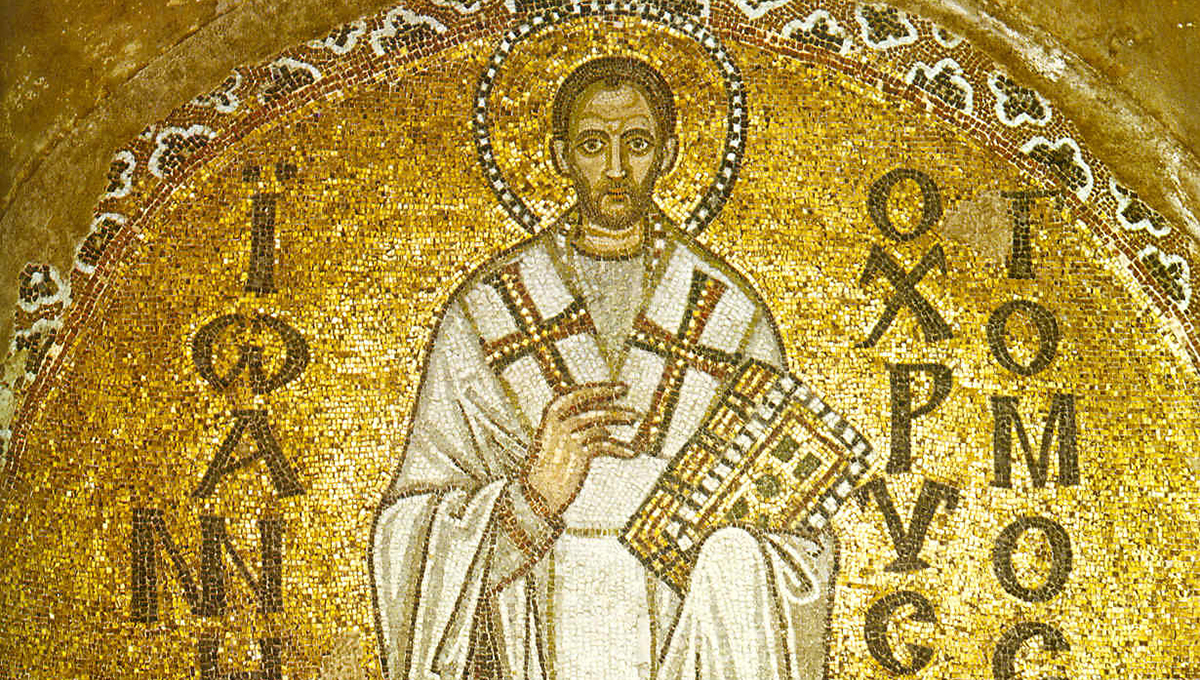
IN THE FOURTH century, in the region we now know as Turkey, there lived a pastor named John. Although his life was relatively short (he died at the age of 58) he has had an enormous impact on the Christian church. John was incredibly gifted, intense, and deeply serious about his faith. Not long after his conversion, he withdrew from society to live as a hermit for several years. He allegedly spent two full years doing nothing but memorizing the Bible while standing up. It was a rigorous discipline; he hardly slept, and his health was permanently damaged by the ordeal.
continue reading
ONCE when a friend and I were having coffee and chatting about hell, as friends do, and I grew increasingly squeamish at the topic, as one does, my friend surprised me by saying: “Why would someone bother sharing the gospel, if they weren’t thinking about saving someone from going to hell?”
continue reading
THE Anglican Church of Canada’s Council of General Synod has released Pastoral Liturgies at the Time of Death in Contexts of Medically Assisted Dying, the denomination’s first publication on the topic since Faith Seeking Understanding(2024). That earlier collection, presented as a resource for discussion, offered a range of perspectives on euthanasia, including serious reservations and outright opposition. Its editorial stance was neutral, aiming to help Canadian Anglicans think through the ethical and practical complexities of MAiD.

Judith Snowdon is an accomplished Canadian composer and arranger of choral, instrumental and worship music. For more than three decades she has received commissions from choirs as well as awards for her work. The Royal Conservatory of Music and the Canadian National Conservatory of Music have published many of her piano pieces for their students, while several of her hymns have appeared in denominational hymnals. Sue Careless asked the New Brunswick Anglican more about her musical journey.
IT IS 84 years since C.S. Lewis published The Screwtape Letters: Letters from a Senior to a Junior Devil. The year was 1942, the middle of the Second World War, when victory for the free world was by no means certain. It quickly became a wartime bestseller.
This sermon was preached on May 3rd as part of an Eastertide homily series on the spiritual senses held at St. Thomas’s Anglican Church in Toronto.
Copyright © 2026 The Anglican Planet. All rights reserved