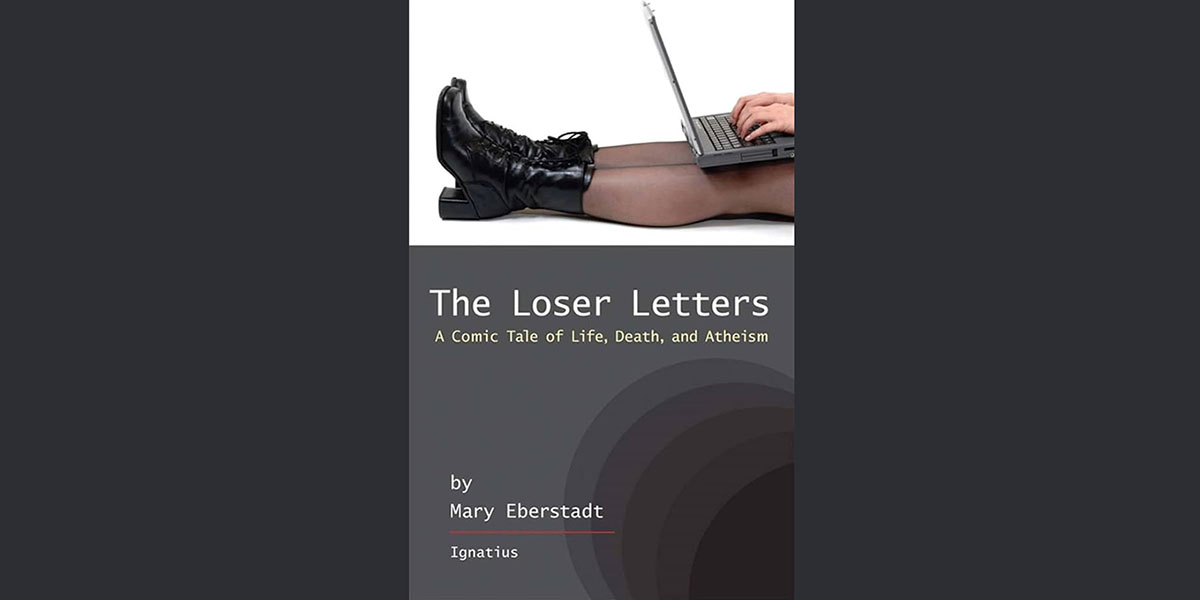
By Mary Eberstadt
Ignatius Press, 2010
Review by Sue Careless
IT IS 84 years since C.S. Lewis published The Screwtape Letters: Letters from a Senior to a Junior Devil. The year was 1942, the middle of the Second World War, when victory for the free world was by no means certain. It quickly became a wartime bestseller.
Has anyone attempted a similar comic apologetic for the Christian faith? Yes, and I don’t know how I missed it.
Lewis was a Belfast-born Anglican who wrote to defend the Christian faith generally. Mary Eberstadt is an American Roman Catholic but her apologetic The Loser Letters is also a defence of the Christian faith, not any particular denomination within it.
Lewis has the shrewd older devil Screwtape write 31 witty letters to the novice Wormwood about how to keep his patient (a Christian) out of the hands of the Enemy (God.)
Eberstadt, who is an acclaimed cultural critic, wrote The Loser Letters when atheism was having a resurgence in the early 21st century. Her comic heroine is A.F. (A Former) Christian, a recent convert to atheism who wants to advise the New Atheism spokesmen (and they are all men) on how they can gain more converts.
A.F. Christian is writing her ten letters to the likes of Richard Dawkins, Sam Harris, Daniel Dennett and Christopher Hitchens.
She wants to alert them to what could be potential traps and shortfalls in their arguments.
She addresses key topics such as The Sexual Revolution; Reason and Logic; Good Works; Art and Beauty; “obnoxious” Christian converts; Women, Children and Families; and “the unbelievably annoying problem of Christian Moral High Ground.”
The Loser is God and his followers the Dulls, while the atheists are the Brights.
(Brights was actually a term coined by Paul Geisert who disliked the label “godless” because he thought it alienated the general public from those like himself who did not believe in the supernatural.)
Eventually A.F. Christan tells the spokesmen for the New Atheism her own conversion story from being a cradle Dull to becoming a committed Bright.
Eberstadt has created A.F. Christian as a university grad in her early twenties with all the lingo and energy of her age. Eberstadt has a good ear for the cadences and idioms of her own adult children and transcribes it with ease.
What results is a wise and scathing satire that is wickedly funny.
Lewis has been called an “apostle to the skeptics.” Perhaps Eberstadt could be considered an apostle to the atheists. Certainly, both writers can help believers better articulate their faith and not be afraid of the arguments lobbed against them.
Playwright Jeffrey Fiske has adapted The Loser Letters for the stage, which had its world premiere at The Catholic University of America in Washington, D.C. in 2016. The timing of this adaptation, according to Kathryn Jean Lopez of National Review, “may just be an opportunity to catch millennial ‘nones’ with an invitation. It’s also a nudge to conservatives and others to get creative. Polemics alone won’t change the world.”
You may not get an opportunity to see the play The Loser Letters but you can certainly read the book. TAP

STANLEY Hauerwas once said, “In a hundred years, if Christians are known as a strange group of people who don’t kill their children and don’t kill the elderly, we will have done a great thing… If we can just be a disciplined enough community, who through the worship of God has discovered that we are ready to be hospitable to new life and life that is suffering,…that is a political alternative that otherwise the world will not have.”
continue reading
IN THE FOURTH century, in the region we now know as Turkey, there lived a pastor named John. Although his life was relatively short (he died at the age of 58) he has had an enormous impact on the Christian church. John was incredibly gifted, intense, and deeply serious about his faith. Not long after his conversion, he withdrew from society to live as a hermit for several years. He allegedly spent two full years doing nothing but memorizing the Bible while standing up. It was a rigorous discipline; he hardly slept, and his health was permanently damaged by the ordeal.
continue reading
ONCE when a friend and I were having coffee and chatting about hell, as friends do, and I grew increasingly squeamish at the topic, as one does, my friend surprised me by saying: “Why would someone bother sharing the gospel, if they weren’t thinking about saving someone from going to hell?”
continue reading
THE Anglican Church of Canada’s Council of General Synod has released Pastoral Liturgies at the Time of Death in Contexts of Medically Assisted Dying, the denomination’s first publication on the topic since Faith Seeking Understanding(2024). That earlier collection, presented as a resource for discussion, offered a range of perspectives on euthanasia, including serious reservations and outright opposition. Its editorial stance was neutral, aiming to help Canadian Anglicans think through the ethical and practical complexities of MAiD.

Judith Snowdon is an accomplished Canadian composer and arranger of choral, instrumental and worship music. For more than three decades she has received commissions from choirs as well as awards for her work. The Royal Conservatory of Music and the Canadian National Conservatory of Music have published many of her piano pieces for their students, while several of her hymns have appeared in denominational hymnals. Sue Careless asked the New Brunswick Anglican more about her musical journey.
IT IS 84 years since C.S. Lewis published The Screwtape Letters: Letters from a Senior to a Junior Devil. The year was 1942, the middle of the Second World War, when victory for the free world was by no means certain. It quickly became a wartime bestseller.
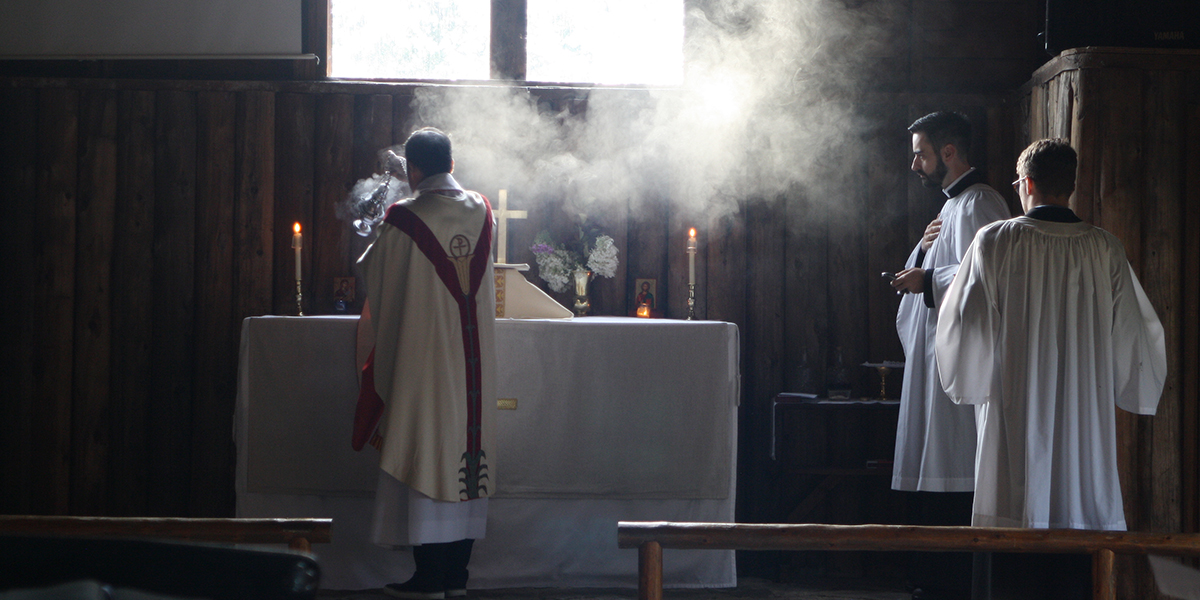
This sermon was preached on May 3rd as part of an Eastertide homily series on the spiritual senses held at St. Thomas’s Anglican Church in Toronto.
Copyright © 2026 The Anglican Planet. All rights reserved